Weather has always influenced utility operations. From severe thunderstorms and winter weather to wildfire conditions and extreme heat, changing weather can impact infrastructure, field crews, reliability, and customer service.
Across the industry, dedicated meteorologists are becoming a more common part of utility operations, helping organizations better understand risk, improve preparedness, and support decision-making in an environment where weather risks are becoming more complex, scrutiny is increasing, and the margin for error is smaller than ever. Many of these professionals come from television broadcast backgrounds, bringing years of forecasting and communication experience into utility environments. Others come from operational forecasting roles in emergency management, aviation, or government.
Regardless of where they come from, they all face the same challenge: translating weather information into operational decisions.
The Utility Meteorologist's Most Important Role
Forecasting is only part of the job.
A utility meteorologist's role is to help the organization understand how weather will impact operations. Every day, they answer questions such as:
- Will winds create a risk to transmission and distribution infrastructure?
- Are wildfire conditions becoming elevated in specific service territories?
- Should field crews be repositioned ahead of an approaching storm?
- Are lightning threats developing near active work sites?
- Which parts of the system are most vulnerable over the next 24 to 72 hours?
The challenge is that the audience for these briefings often isn't made up of weather experts.
Meteorologists are communicating with operations leaders, emergency managers, dispatchers, control room operators, vegetation management teams, and executives. These stakeholders don't need every model trend or forecast parameter. They need to understand what is happening, what is likely to happen next, and what actions should be considered.
That makes communication just as important as forecasting.
The Missing Link: Professional Weather Communication
Many utility meteorologists still rely on a patchwork process to build operational weather briefings. Forecast graphics are often gathered from public weather websites, screenshots are copied into presentations, and weather information must be manually connected to utility assets and service territories.
The process is time-consuming, making it difficult to create weather briefings tailored to operational decision-makers.
For meteorologists coming from television, the difference can be especially noticeable. In broadcast environments, meteorologists have access to professional visualization systems that allow them to create customized graphics, communicate evolving threats, and tell a clear weather story. Many arrive at utilities and discover those same capabilities don't exist within their operational environment.
Baron Lynx was designed to fill that gap.
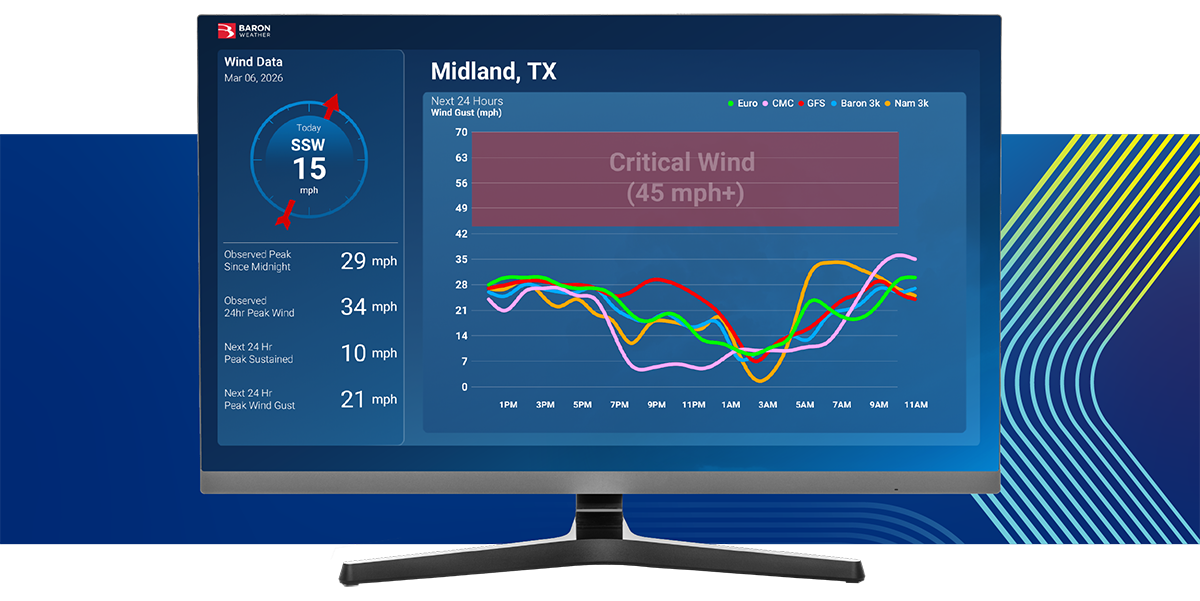
As utilities continue to invest in both meteorological talent and weather monitoring infrastructure, the challenge becomes bringing all of that information together in a way that supports operational decision-making. That's where the partnership between Baron Weather and Western Weather Group comes in.
Through the partnership, utility meteorologists can incorporate Western Weather Group station data directly into Baron Lynx alongside radar, forecast models, storm analysis, environmental intelligence, and utility assets.
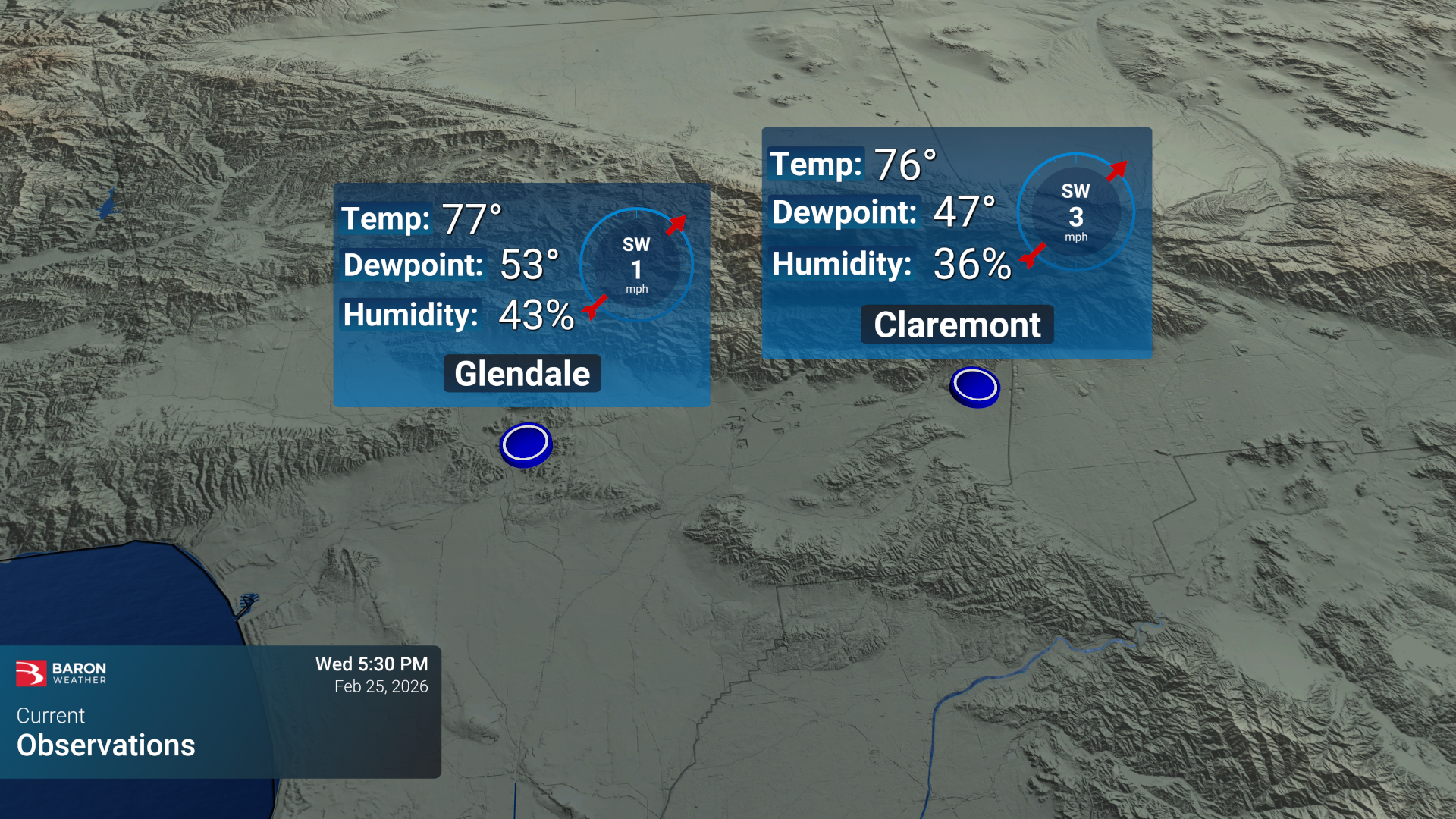
Rather than piecing together information from multiple sources, meteorologists can create weather briefings that combine what is happening now with what is expected to happen next.
Within a single platform, meteorologists can combine what was previously scattered across multiple systems:
- Real-time radar
- Forecast models
- Storm analysis
- Environmental intelligence
- Utility infrastructure and service territories
- Weather station observations
Rather than presenting weather in isolation, meteorologists can communicate weather in the context of the organization they support.
A briefing can show where strong winds are forecast, how those winds relate to utility assets, what current observations indicate, and how conditions are expected to evolve over the coming hours or days.
The conversation shifts from "Here's the weather forecast" to "Here's what this means for our operations."
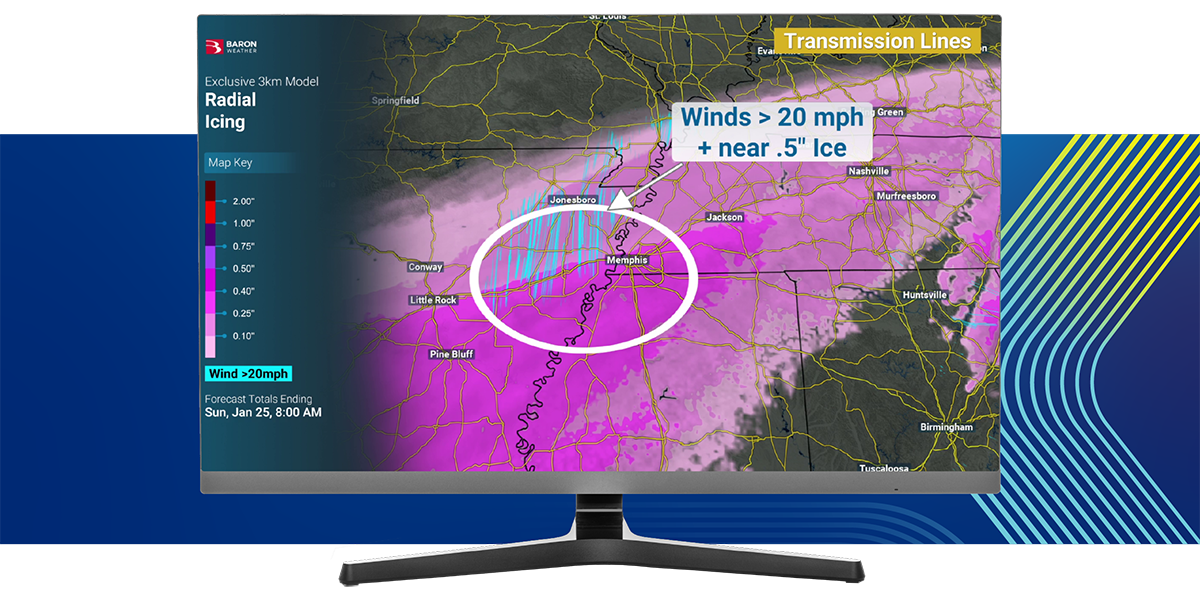
For many utility meteorologists, Lynx becomes the professional weather communication tool they didn't realize was missing from their workflow.
A More Complete Weather Picture
Communication is most effective when it's backed by reliable observations.
Over the past two decades, utilities have made significant investments in weather monitoring infrastructure, deploying weather stations across their service territories to better understand local conditions and support operational decisions.
Western Weather Group has been at the forefront of that effort, helping utilities deploy and maintain utility-grade weather monitoring networks built specifically for critical infrastructure operations. Today, the company has installed more than 8,000 weather stations and 25,000 sensors across 35+ states.
These observations provide critical ground-truth data.
While forecast models and gridded weather analysis provide broad coverage, station observations show what is actually happening on the ground. They help validate forecasts, identify localized conditions, and create a defensible record of weather conditions during significant operational events.
Through the partnership between Baron Weather and Western Weather Group, utility-owned station observations integrate directly into Baron Lynx.
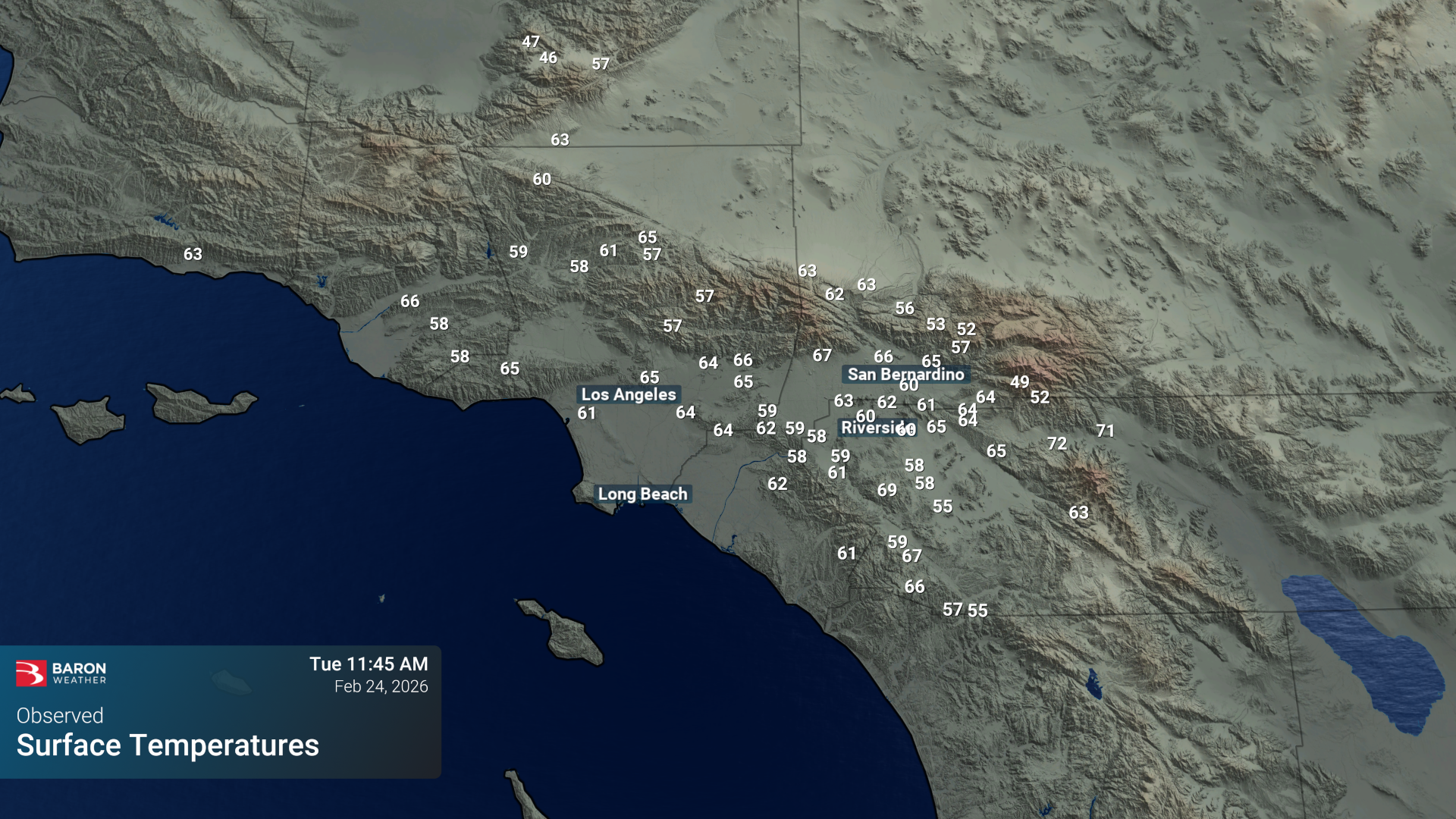
For example, a utility meteorologist may use Western Weather Group station observations to monitor real-time wind conditions in a wildfire-prone area while simultaneously viewing Baron forecasts, radar, storm analysis, and utility assets within the same briefing.
Meteorologists can view real-time station observations alongside radar, forecast models, storm analysis, and utility assets within a single operational picture. Instead of moving between multiple systems, they can combine forecasts, observations, and operational context into one briefing environment.
Western Weather Group provides the ground-truth observations utilities rely on to understand what's happening right now. Baron Lynx provides the forecasting, visualization, and communication tools that help teams understand what's coming next.
The result is greater situational awareness, more effective communication, and increased confidence in operational decision-making.
Equipping the Next Generation of Utility Meteorologists
Utilities are making significant investments in meteorological talent, and for good reason. Weather has become a critical operational input that influences reliability, safety, emergency response, and long-term planning.
But talent alone isn't enough.
Meteorologists need access to accurate observations, predictive weather intelligence, and professional communication tools that let them translate complex weather information into actionable guidance.
As the role of the utility meteorologist continues to evolve, organizations that combine ground-truth observations with purpose-built weather visualization and briefing tools are better positioned to prepare for weather impacts, communicate risk, and support confident operational decisions.
The value isn't measured in forecasts alone. It's measured in outcomes—a crew repositioned before severe weather arrives, a wildfire risk identified before conditions deteriorate, or a grid operations team given the lead time needed to protect critical infrastructure.
Because the goal isn't simply to understand the weather.
It's to understand what the weather means for your operation.
Contact Western Weather Group to learn more about utility weather monitoring networks or request a Baron Lynx demo to see how weather observations, forecasts, and operational context come together in a single platform.