Weather has always influenced property insurance, but today's insurers need more than a forecast to make informed decisions. From evaluating risk before a policy is written to responding after catastrophic weather, insurers rely on timely weather intelligence to support underwriting, catastrophe response, and claims operations.
As severe weather becomes more frequent and property losses continue to rise, insurance organizations are looking for ways to strengthen underwriting support, improve catastrophe modeling, and streamline claims process optimization. The right weather intelligence solution helps insurers better understand risk before an event, monitor evolving conditions in real time, and respond more efficiently when severe weather impacts policyholders.
Unlike weather platforms built primarily around forecasts, weather intelligence helps insurers understand what weather means for their policies, customers, and operations—not just what the weather will be.
Not all weather intelligence providers offer the same capabilities. Some specialize in forecast data, while others focus on historical weather analysis, catastrophe modeling support, APIs, or operational weather tools. Before choosing between weather data vendors, it's important to understand how weather intelligence will be used across your organization and which capabilities will have the greatest impact on underwriting, catastrophe response, and claims operations. This guide outlines the key considerations to help property insurers evaluate weather intelligence solutions with confidence.
Weather Intelligence Supports the Entire Insurance Lifecycle
Weather influences nearly every stage of the property insurance lifecycle.
Before a policy is written, weather patterns and environmental risk help underwriters better understand a property's exposure. As storms develop, catastrophe response teams monitor changing conditions to assess potential impacts and position resources before severe weather strikes. After an event, claims teams need reliable weather intelligence to prioritize inspections, verify reported damage, and communicate with policyholders more effectively.
Rather than serving a single department, weather intelligence becomes a shared resource that supports better decisions across underwriting, catastrophe response, claims, and executive leadership. Whether supporting underwriting, catastrophe modeling, claims operations, or enterprise-wide situational awareness, the most effective weather intelligence solutions don't simply deliver weather data—they provide the context needed to understand how weather impacts policies, customers, and day-to-day operations.
Look Beyond Forecasts
One of the biggest mistakes organizations make when evaluating weather intelligence is focusing only on forecasts. While forecast accuracy is important, it's only one piece of the picture.
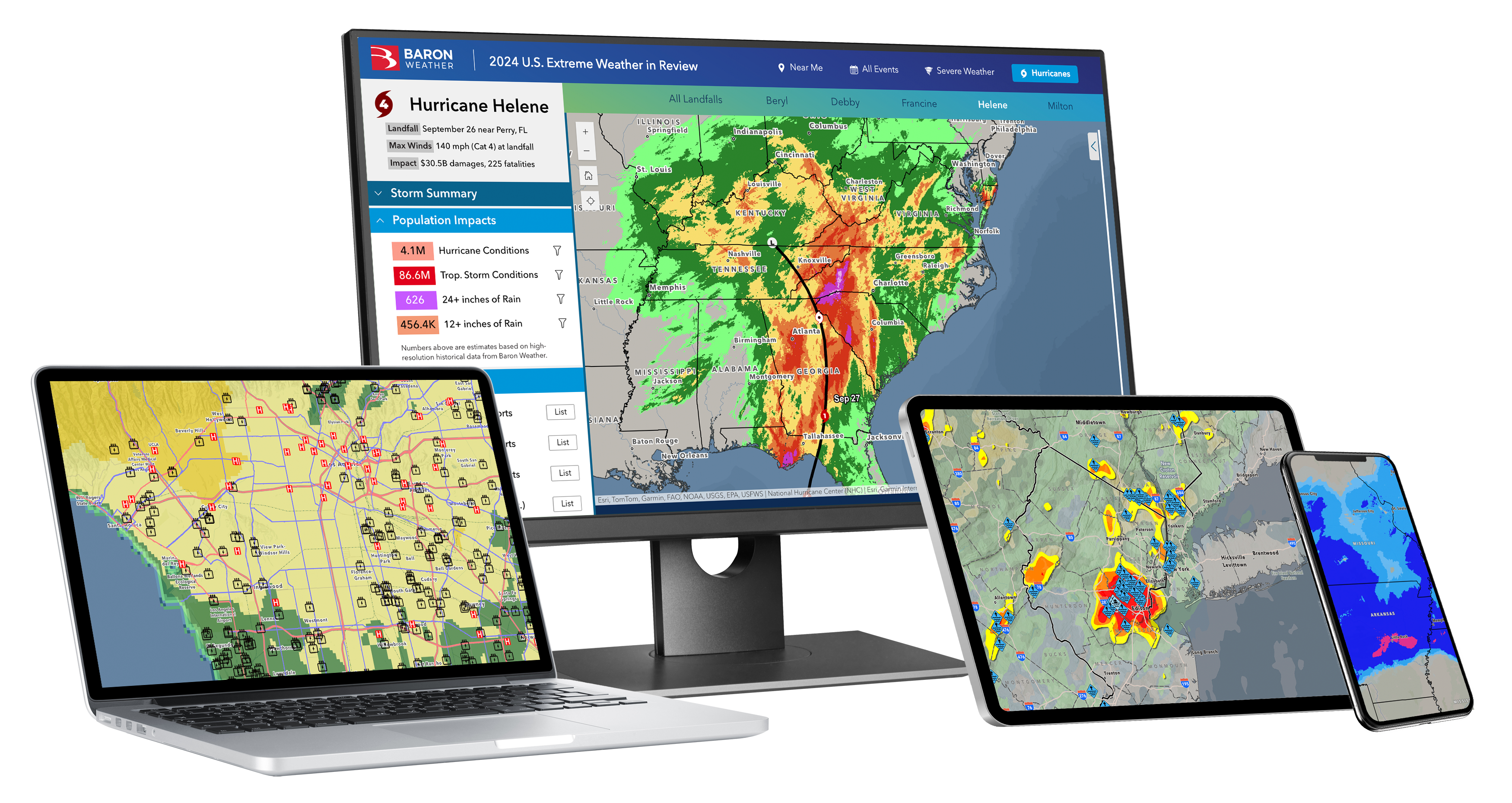
Property insurers need more than tomorrow's forecast. They need access to real-time radar, lightning detection, hurricane tracks, flood guidance, hail analysis, winter weather, severe weather alerts, high-resolution forecast models, and historical weather records—all working together to provide a complete picture of weather risk.
Instead of piecing together information from multiple sources, insurers benefit from weather intelligence that fits naturally into their existing operations. Through solutions including Weather Logic, ArcGIS Weather Layers, Weather APIs, and operational weather datasets, Baron brings together observations, forecasts, alerts, and historical weather into a connected ecosystem. Whether monitoring storms, integrating weather into internal applications, or supporting enterprise-wide awareness, insurers gain the context needed to make faster, more informed decisions.
Strengthen Catastrophe Modeling with Better Weather Intelligence
Catastrophe modeling helps insurers estimate potential losses, but the quality of those models depends on the weather information supporting them.
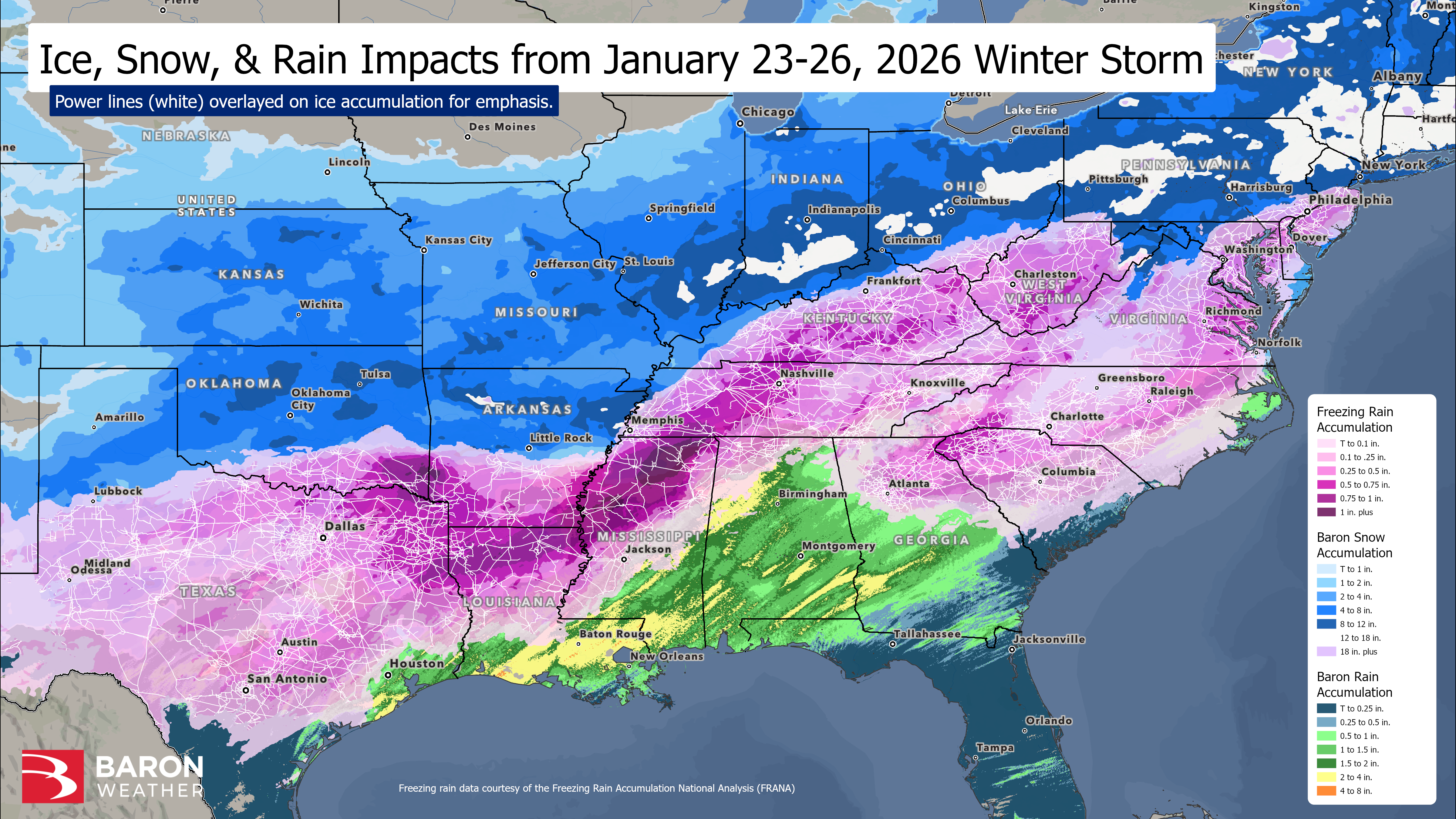
Weather observations, radar, storm reports, rainfall totals, hail footprints, wind swaths, lightning data, and event timelines all provide valuable context for understanding how an event unfolded and how it impacted insured properties. These datasets help insurers evaluate portfolio exposure, analyze past events, and improve future catastrophe planning.
More importantly, they help answer the question every insurer asks after a major weather event: What happened, where did it happen, and what could it mean for our policyholders?
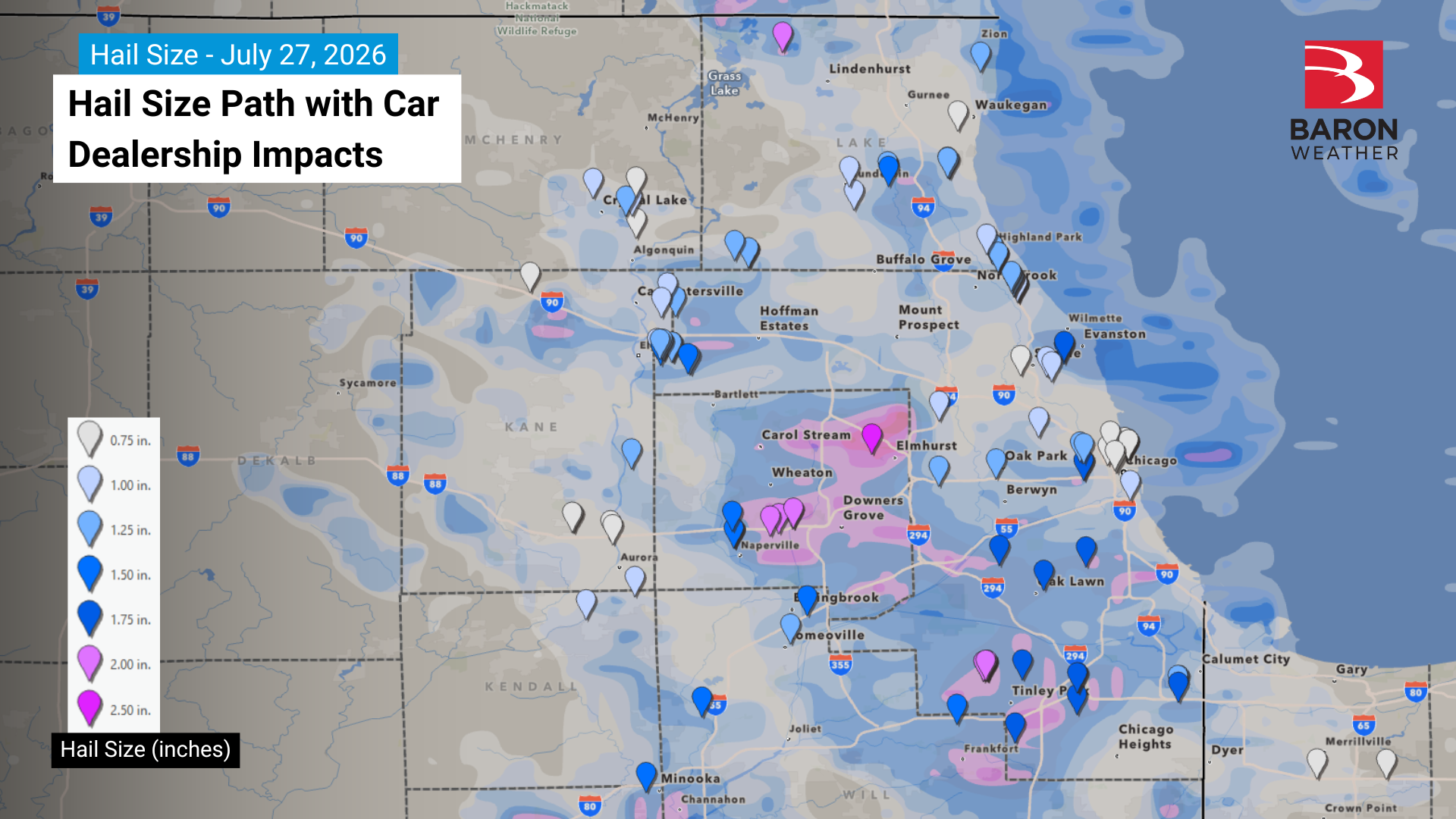
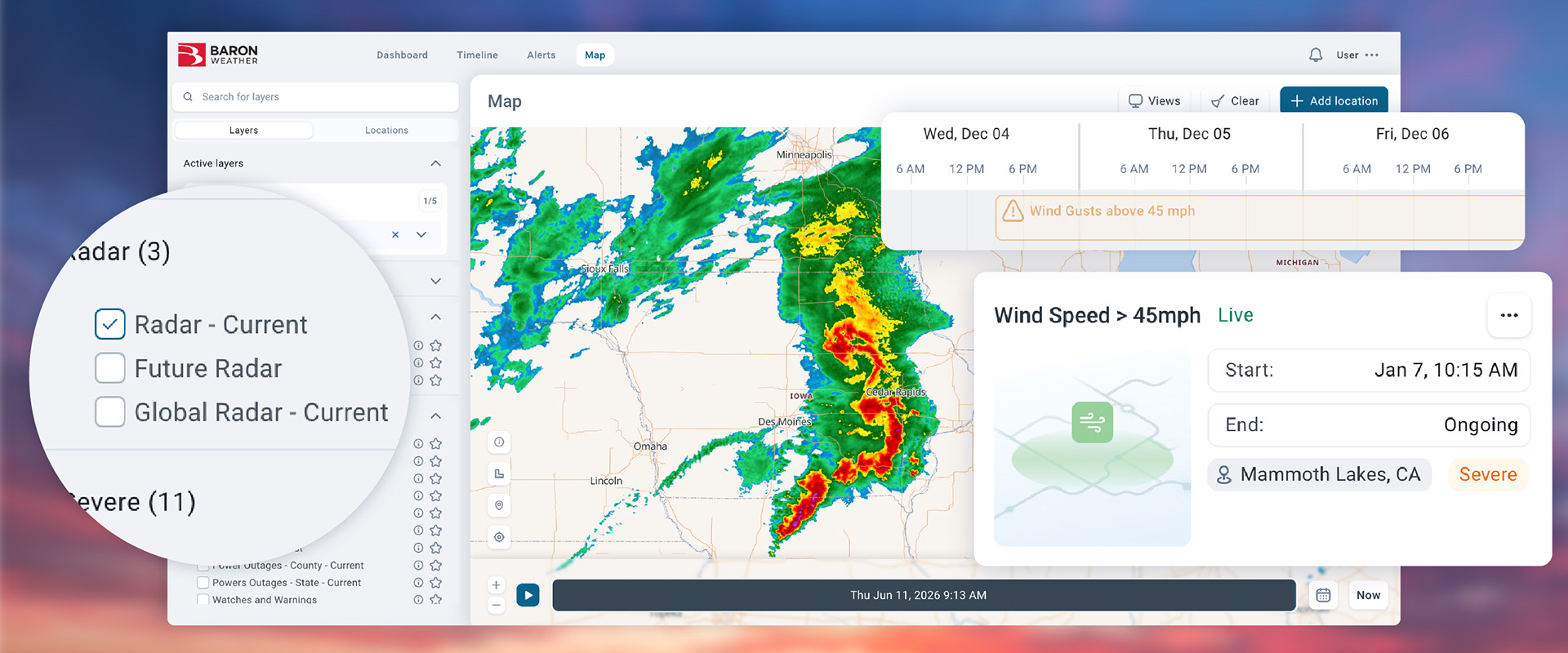
Consider a large hailstorm moving through a metropolitan area. As the storm develops, operations teams can use Weather Logic to monitor radar, lightning, severe weather alerts, and hail reports in real time. After the event, they can review weather conditions, radar, and storm reports to better understand where the storm tracked, assess potential impacts, and support post-event analysis.
Additional datasets, such as Baron Storm Intel, hail swaths, and severe weather reports, provide another layer of insight for understanding storm impacts and supporting catastrophe modeling during significant weather events.
Support Better Underwriting Decisions
Every property presents a unique level of weather risk. While underwriters consider many factors during the evaluation process, weather intelligence provides valuable environmental context that may not be immediately apparent.
Long-term weather trends, historical hail frequency, flood potential, wildfire conditions, lightning activity, wind exposure, and heavy rainfall patterns all contribute to a more complete picture of risk. Access to this information gives underwriting teams additional support when evaluating properties and helps them better understand the environmental conditions that may influence exposure over time.
Rather than replacing underwriting expertise, weather intelligence provides another layer of insight that supports more informed decisions. With Baron's high-resolution weather datasets and historical weather capabilities, insurers can strengthen underwriting support by incorporating trusted weather intelligence into the workflows they already use.
Improve Claims Process Optimization After Severe Weather
When severe weather strikes, claims volume can increase dramatically in just a few hours. Quickly understanding where the greatest impacts occurred allows insurers to improve claims process optimization while delivering a better experience for policyholders.
Real-time weather intelligence enables claims teams to monitor storms as they develop, identify potentially impacted areas, verify weather conditions at specific locations, and prioritize inspections based on likely damage.
Imagine a severe thunderstorm producing large hail across multiple counties. Instead of waiting for claims to reveal where damage occurred, operations teams can monitor the storm in real time and quickly identify the areas most likely to be affected. Baron provides radar-derived hail swath datasets that display the maximum hail size and hail probability observed over the previous three and 24 hours, updating every five minutes. This gives insurers a timely view of where damaging hail has likely occurred and helps claims managers prioritize resources before claims volume peaks.




After the event, those same hail swaths, combined with radar, storm reports, and historical weather records, provide valuable documentation to help validate claims, verify reported conditions, and support post-event investigations.
The result is a faster, more informed response that improves operational efficiency while helping policyholders receive assistance sooner.
Choose a Solution That Fits Your Existing Workflows
The best weather intelligence solution isn't one that simply delivers more weather data—it's one that integrates naturally into the way your organization already operates.
Weather intelligence delivers the most value when it fits into the systems insurers already use. APIs, GIS integrations, automated alerts, dashboards, and customizable weather layers allow teams to access relevant weather information without changing the way they work.
Baron's Weather APIs, ArcGIS Weather Layers, customizable alerting solutions, and operational weather platforms are designed to fit into existing insurance workflows. Instead of requiring users to switch between multiple applications, weather intelligence can be delivered directly into the systems that underwriting, catastrophe response, and claims teams already rely on every day. The result is faster access to critical weather information, better collaboration across departments, and more informed business decisions.
Make Better Decisions Before, During, and After Severe Weather
Weather will always be one of the biggest variables affecting property insurance, but uncertainty doesn't have to be.
The right weather intelligence solution provides more than forecasts. It helps insurers better understand risk before a policy is written, maintain situational awareness as weather unfolds, and respond more effectively when severe weather impacts policyholders.
Whether you're evaluating weather data vendors or expanding the capabilities of your current platform, the goal isn't simply to access more weather data—it's to make better business decisions with it.
For more than 30 years, Baron has helped organizations transform weather information into operational intelligence through innovative technology, trusted meteorological expertise, and purpose-built solutions. From underwriting support and catastrophe modeling to claims process optimization, our solutions help property insurers stay ahead of weather—not simply react to it.
Ready to see how Baron can support your insurance operations? Contact our team to learn more.