As December arrives, so does meteorological winter—a season defined by data, not just dates. Spanning December 1 through February 28 (or 29 in leap years), meteorological winter aligns with the coldest three months of the year. This calendar-based approach allows meteorologists to analyze seasonal patterns more consistently than the astronomical timeline, which begins with the winter solstice in late December.
For industries and agencies that depend on weather intelligence, understanding winter’s unique challenges starts with the right data.
The Risk of Inadequate Data
When it comes to winter hazards, bad data—or no data—means lost time, missed warnings, and higher costs.
- Aviation, transportation, and utilities face safety risks, scheduling chaos, and financial strain from unplanned outages or closures.
- Broadcasters lose viewer trust when forecasts or on-air visuals miss the mark or arrive too late.
- Businesses face operational downtime, financial losses, and damaged customer confidence.
- Construction companies risk missed deadlines and costly project delays due to unanticipated weather impacts.
- Public safety agencies and emergency managers risk delayed response and reduced situational awareness when conditions change rapidly.
- Retail and logistics networks encounter holiday-season disruptions when supply chains and routing aren’t weather-ready.
Accurate data is the difference between reacting to a storm and staying ahead of it.
What Meteorological Winter Brings
From subfreezing temperatures to snow, ice, and wind, meteorological winter delivers a mix of hazards that can strain infrastructure, disrupt travel, and test community resilience.
Key seasonal risks include:
- Extreme cold and wind chill: Prolonged cold snaps increase energy demand, stress water systems, and endanger outdoor operations. They also impact public safety by driving demand for housing shelters and placing vulnerable populations—and pets—at greater risk.
- Freezing rain and ice accumulation: Among the most damaging winter hazards, capable of toppling power lines, closing roads, and grounding aviation and transportation fleets.
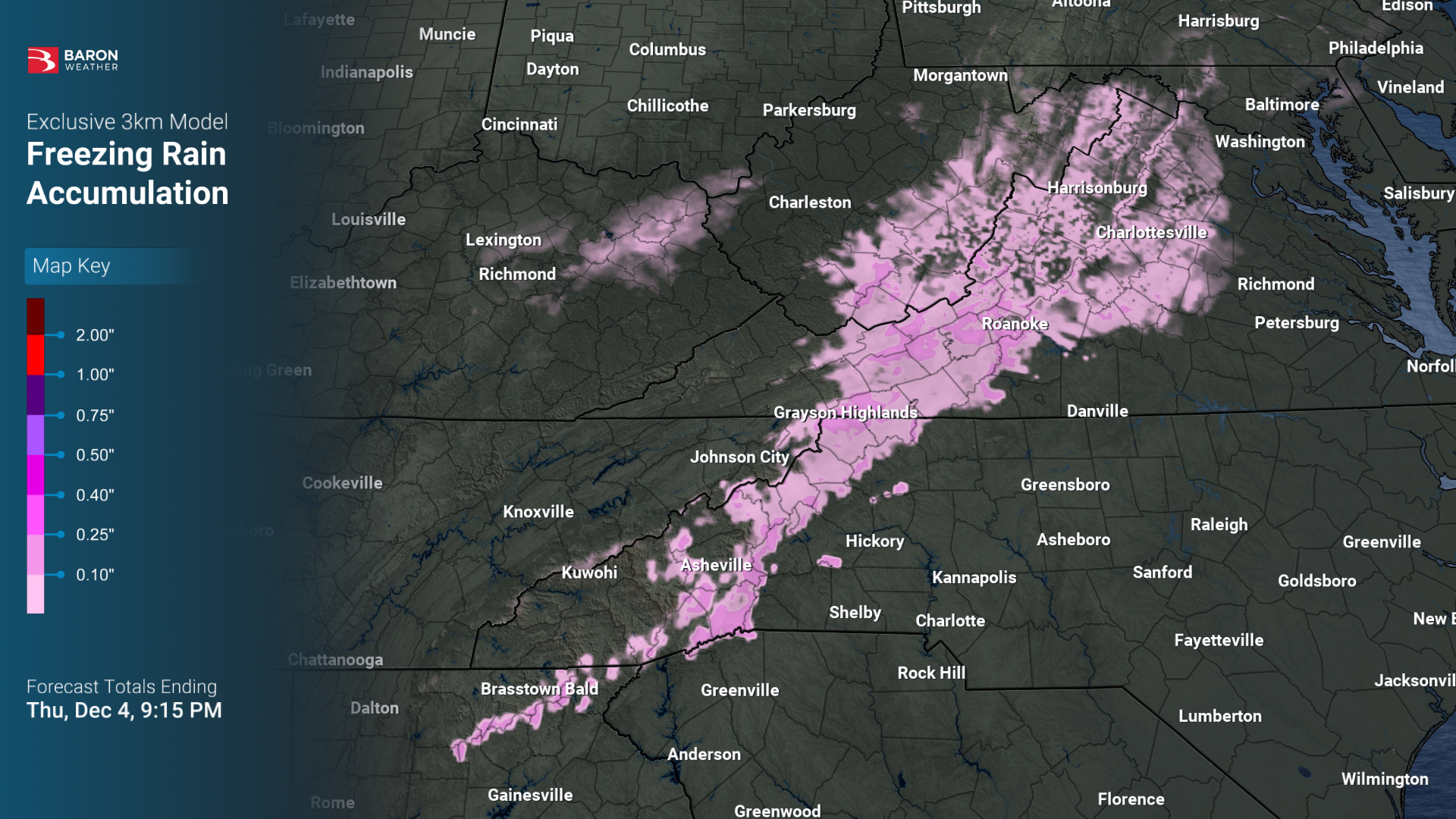
- Rapid freeze–thaw cycles: Temperature swings lead to slick roads, burst pipes, and infrastructure deterioration.
- Winter storms and snow squalls: Heavy snowfall and reduced visibility disrupt travel, impact aviation routes, and complicate emergency response.
These conditions can halt operations, delay recovery, and endanger lives if organizations aren’t equipped with accurate, timely weather data.
Better Decisions with Baron Data
Baron Weather delivers high-resolution data and visualization tools to help you anticipate, plan, and respond confidently all winter long.
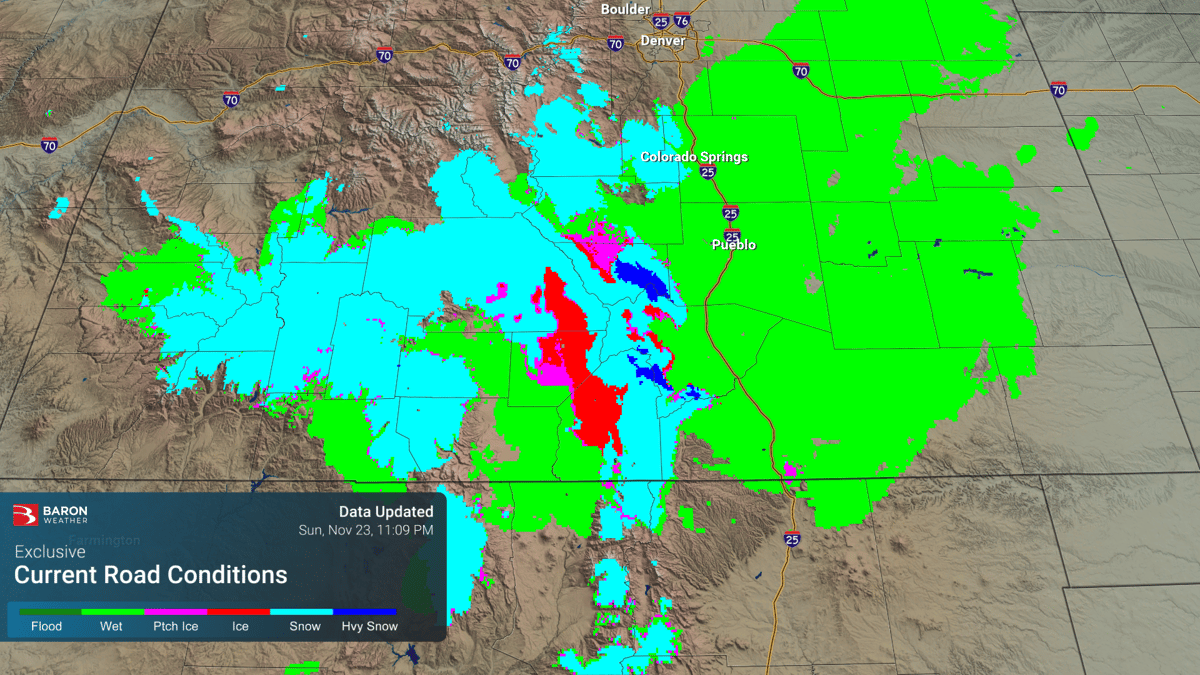
Road Weather & Ice Risk: Monitor surface conditions to support DOTs, fleets, and public safety operations.


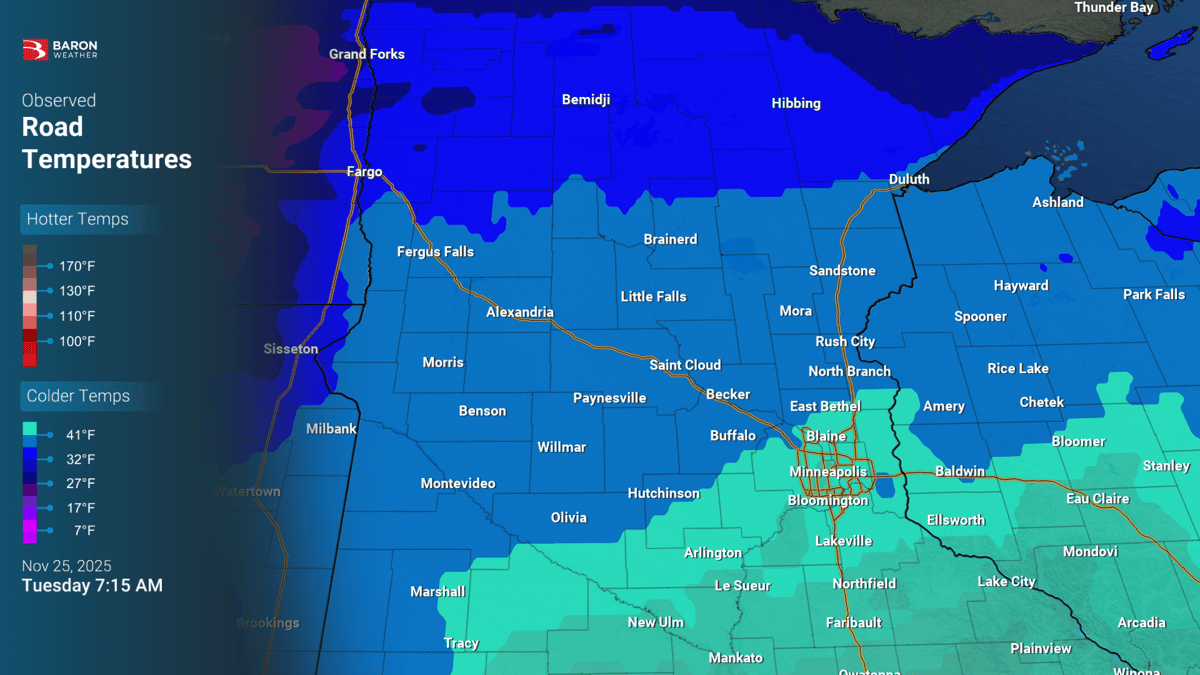
Wind Chill & Temperature Forecasts: Track extreme cold impacts across energy grids, utilities, and agriculture.
Winter Precipitation Type & Accumulation Data: Identify where snow, sleet, or freezing rain will occur—and how much will fall.
These data products are delivered through:
- Weather Logic: Customize thresholds, generate automated reports, and keep all stakeholders aligned in real time.
- Baron APIs: Access detailed forecast layers and model data directly within your systems and applications.
- ArcGIS Weather Layers: Seamlessly integrate Baron data into your existing Esri workflows for a unified operational picture.
- Baron Threat Net: Monitor changing conditions and set custom alerts for snow, ice, and extreme cold.
Whether you’re coordinating public safety, managing fleets, or keeping communities informed, Baron ensures your winter decisions are backed by data you can trust.
A Season of Cold and Clarity
Meteorological winter challenges every sector—from public safety to transportation and energy. With Baron’s smarter data, you can stay ready for whatever the cold season brings.
From the first flurries to the final thaw, Baron Weather equips you to see clearly, act confidently, and protect what matters most. Talk to our team today.
Once winter gives way to warmer days, stay tuned for our next feature on Meteorological Spring and how to prepare for severe storm season.