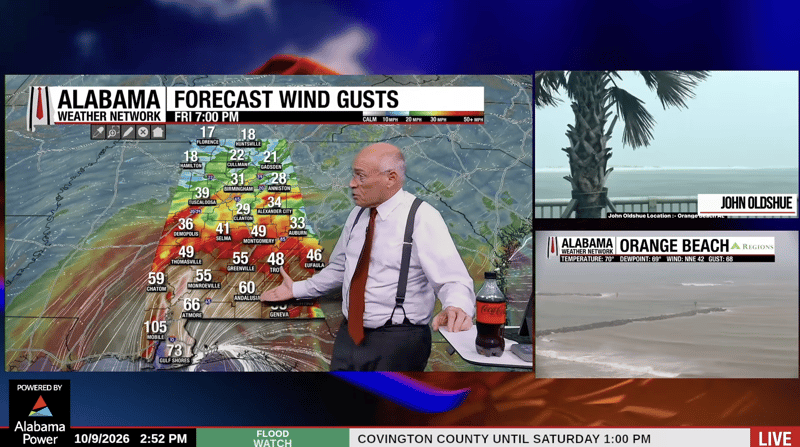
When Hurricane Isaias strengthened into a major hurricane, Alabama Weather Network went live at 7:30 a.m. and stayed on the air for roughly 22 hours as the storm came ashore and moved up I-65. At the peak of coverage, seven times as many people were watching as on a normal day, and their app picked up more than 26,000 new users in a single week.
For a network that’s just over a year old, Isaias was its first major hurricane and one of its biggest tests yet.
A New Kind of Weather Network
Alabama Weather Network launched in August 2025 as the country's first statewide weather network, founded by James Spann. The idea behind it is simple: storms don’t stop at TV market lines, so coverage shouldn’t either.
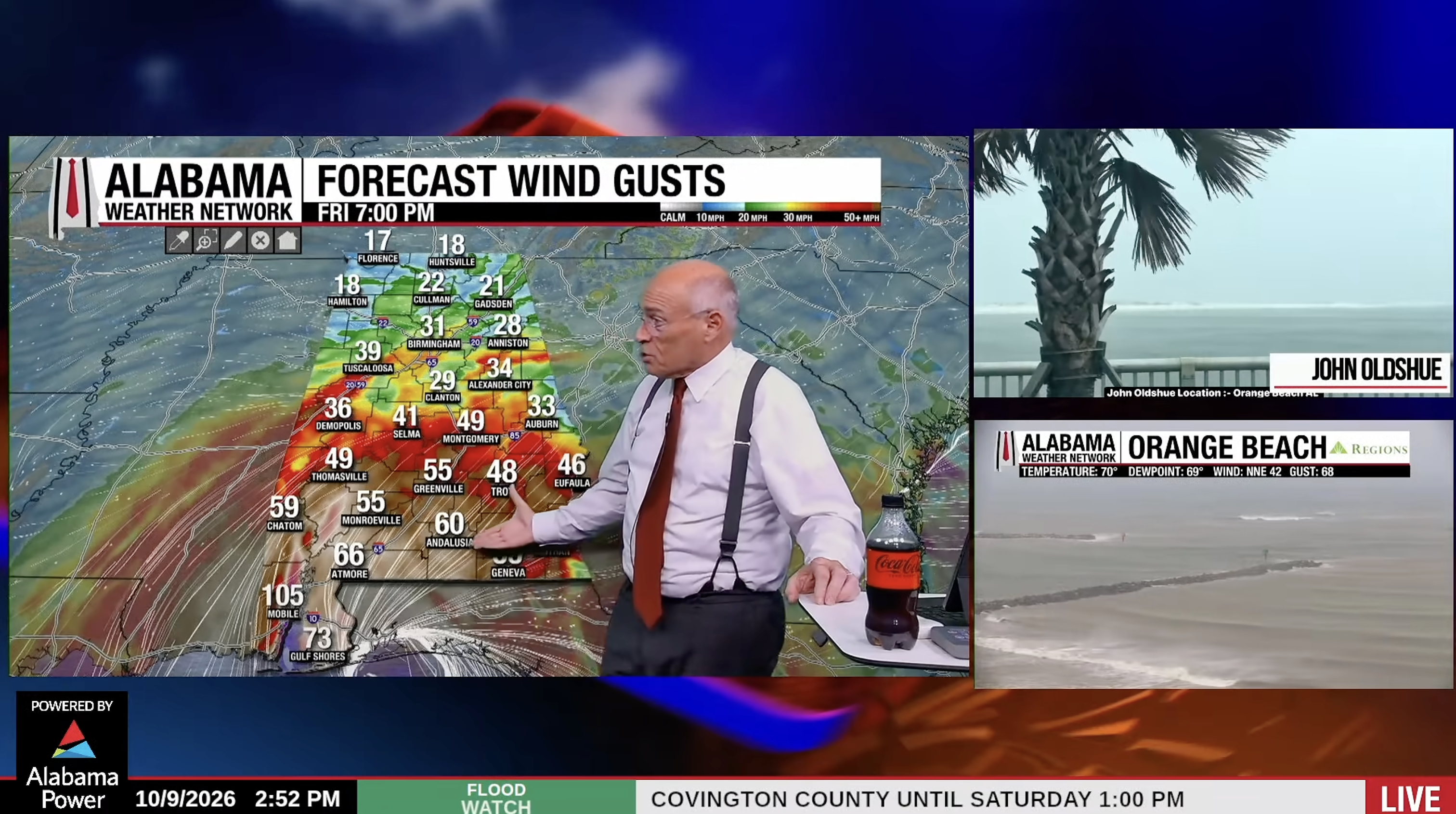
“We don’t have to follow any television station rules,” said Bill Murray, Chief Operating Officer of Alabama Weather Network. “We can just do what we want to do.”
It’s part of a growing shift in the industry, as more meteorologists build their own brands and go live whenever the weather calls for it. That independence also means building everything a station would normally provide, often with a much smaller team.
“These digital operations don’t have big staffs,” Bill said. “And you’ve got to have things that are reliable and can be counted on.”
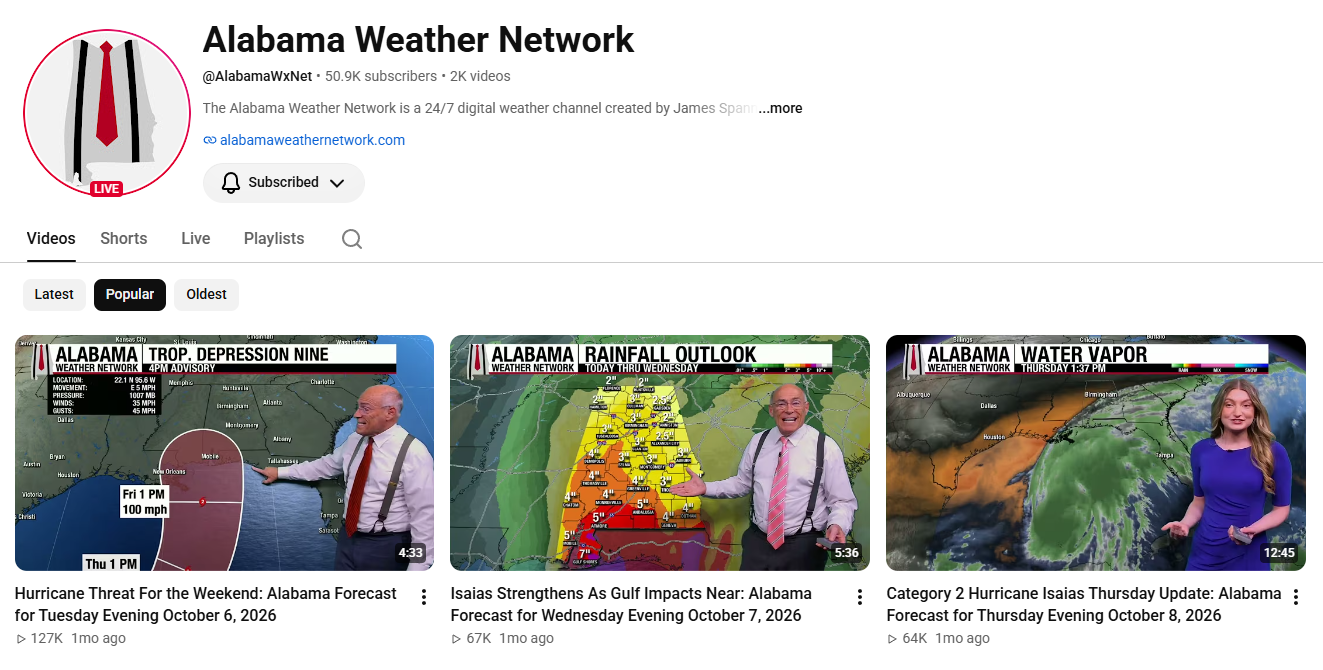
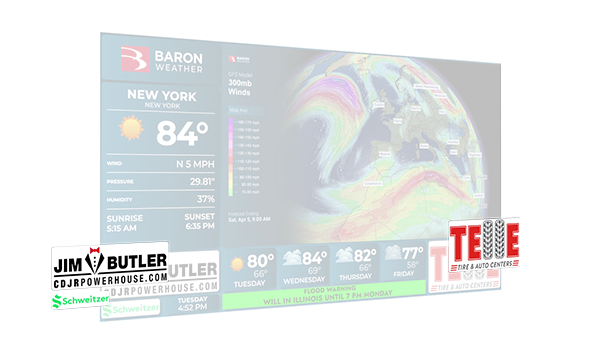
For AWN, those tools come from Baron. Baron Lynx powers the graphics and data behind every forecast and live broadcast. Their app, built on Baron’s white-label platform, puts that coverage in viewers’ hands and lets them know the moment the team goes live. During Isaias, the team relied on both from the first live update to the last.
The Audience Showed Up
On landfall day, 244,600 people tuned in to Alabama Weather Network, 2.7 times a normal day. The following day, the live channel logged 52,000 hours watched, 5.7 times normal, and concurrent viewers peaked at seven times the usual level.
From Oct. 1 to 10, their YouTube channel drew 1.83 million views and gained 9,091 subscribers, while Facebook video reached 7.7 million views, including 3.4 million on landfall day alone.
Viewers also moved the coverage to the biggest screen in the house. Roku went from about 7% of the audience to 40% at the peak, a clear sign that people were sitting down to watch the storm unfold.
The app added 26,405 new installs that week, compared with about 1,800 in a typical week. Traffic like that is exactly when systems tend to break. Lynx kept the coverage running, and the app handled the surge without a problem.
“If we had developed our own app, we would have to be able to make sure that it could handle huge surges in demand,” Bill said. “We don’t have to worry about that with the Baron app. It just works. In a year, it’s never once had a problem.”
Keeping Up With the Storm
In live hurricane coverage, the latest data has to be available the moment it’s needed. Instead of pulling graphics and data from a long list of websites, everything the team needs is already in Lynx.
“If a new warning pops up, boom, it’s there,” said meteorologist Sadie Morris. “When we’re live and there’s so much going on at once, having the ability to switch between products very quickly is super important.”
AWN ran three Lynx machines at once to track the latest conditions, live cameras, and parts of the eyewall as the storm moved inland.
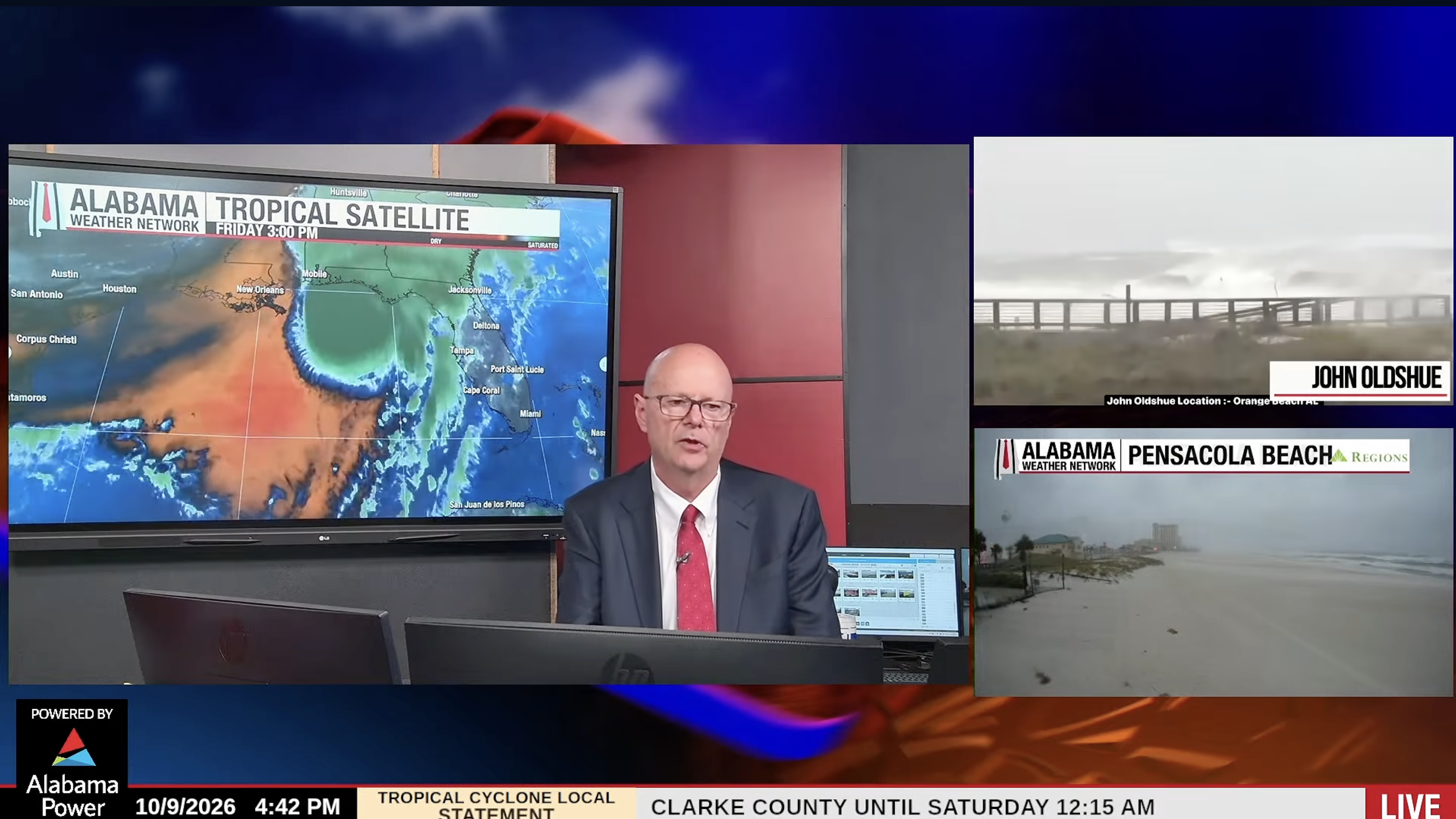
“We could not do this channel without Lynx,” Bill said. “It’s our storytelling platform.”
Of all the exclusive, location-specific data Baron provides, live power outage data stood out most.
“The power outage tools were crucial for me,” Sadie said. “Because it was live data, we could show viewers that an hour ago we were in light blues, and now the whole southern portion is in orange and red. We would compare it to the wind gusts and kept updating it for days afterward to see how things had changed.”
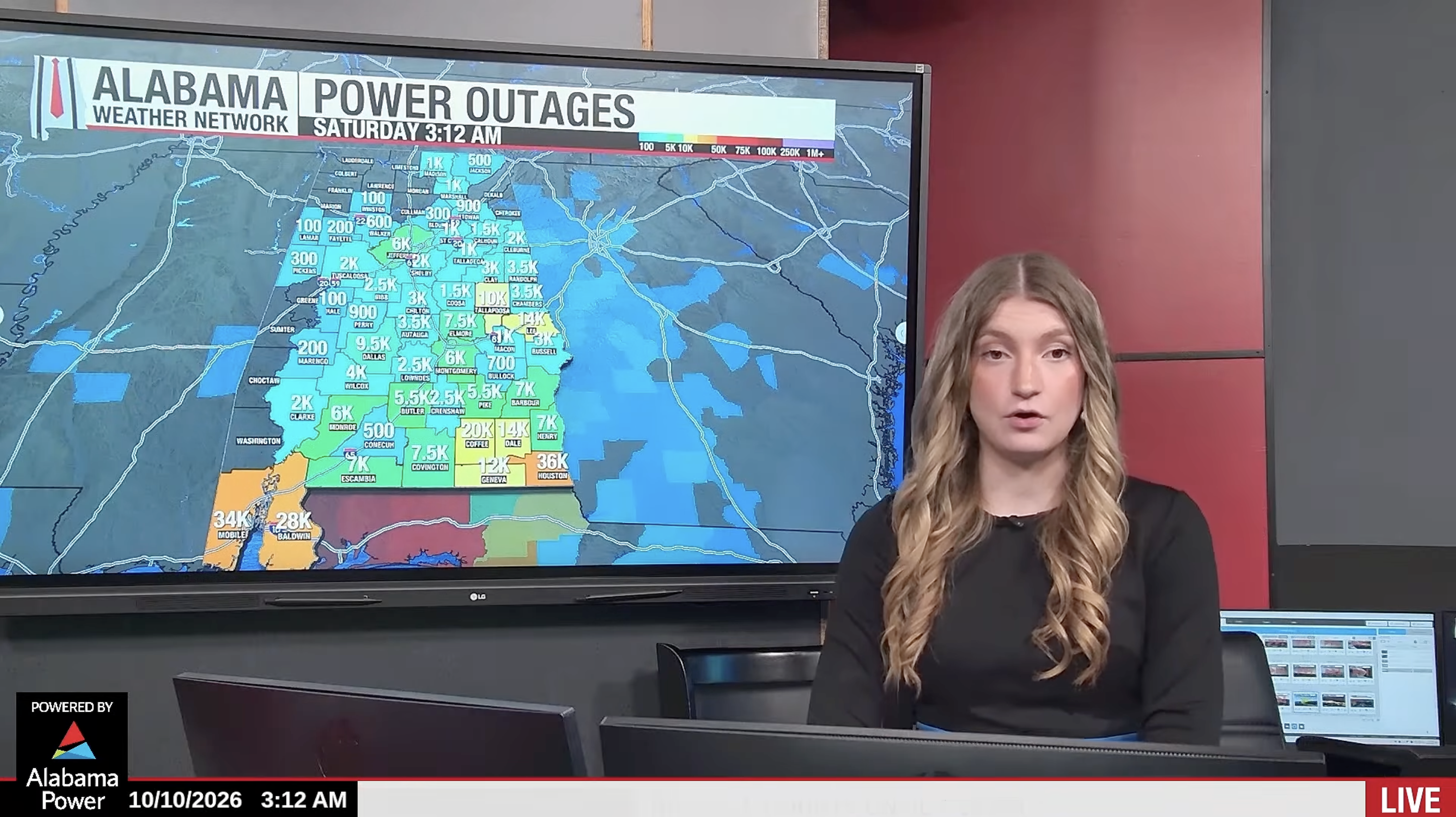
While Lynx powered what viewers saw, the app made sure they saw it.
“Lynx is the cornerstone of how we’re producing what’s actually going out to the public, and the app is the cornerstone of how users interact with what we’re doing and get their information,” said Drew McCombs, Chief Technology Officer of Alabama Weather Network.
When the team breaks into live coverage, a push notification lets app users in the area know right away. Along with “we’re live” posts on Facebook, their biggest social platform, those notifications are the biggest driver of tune-in during a major event.
A Professional Look on Every Platform
Once viewers tune in, earning their trust starts with how AWN shows up on screen. The network stays consistent everywhere its audience finds it, from its live coverage to its app, website and social media, and Lynx graphics give it the polish of a full TV operation.
“It’s still a professional solution that you can look at, and it still looks like TV graphics,” Drew said. “It doesn’t look like it was generated by AI, and it doesn’t look like it’s being run on a website.”
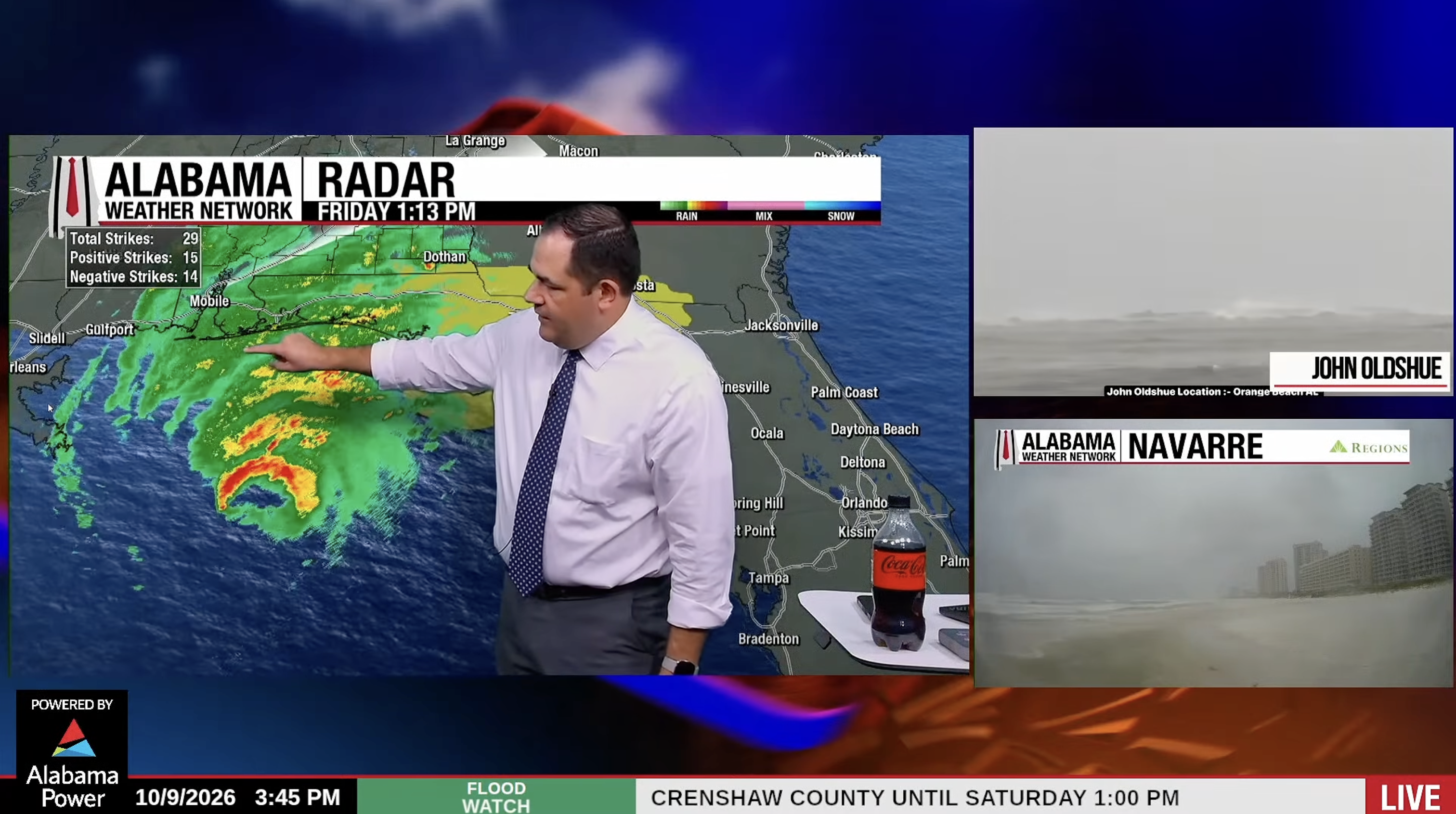
That same polish carries into their social media content, like this Oct. 7 Instagram update where Sadie breaks down Tropical Storm Isaias’s forecast track.
Behind the Scenes
The work continues even when live coverage ends. Web Scheduler keeps the 24/7 channel updated overnight, whether or not anyone is in the studio, so the team never has to worry about it.
“Being a new network that we’ve built from nothing, there have been tons of technical issues we’ve had to work through,” Drew said. “But as far as I can remember, none of that has really ever had anything to do with Lynx or the Baron side of things. Things have just worked.”
Baron’s in-house meteorologists create daily graphics that are ready to use, and Quick Editor makes it fast to get a forecast out when the weather is constantly changing.
“Productivity-wise and workflow-wise, I love Baron,” Sadie said. “You can go into Quick Editor, punch in everything you need and done.”

The solution supports the business side, too. As a free, ad-supported channel, AWN depends on its sponsors, and Lynx makes it easy to keep them on screen.
“We have to make sure our sponsors receive the exposure that they need,” Bill said. “Without those sponsors, we wouldn’t be here. And everything that Lynx does allows us to do that.”


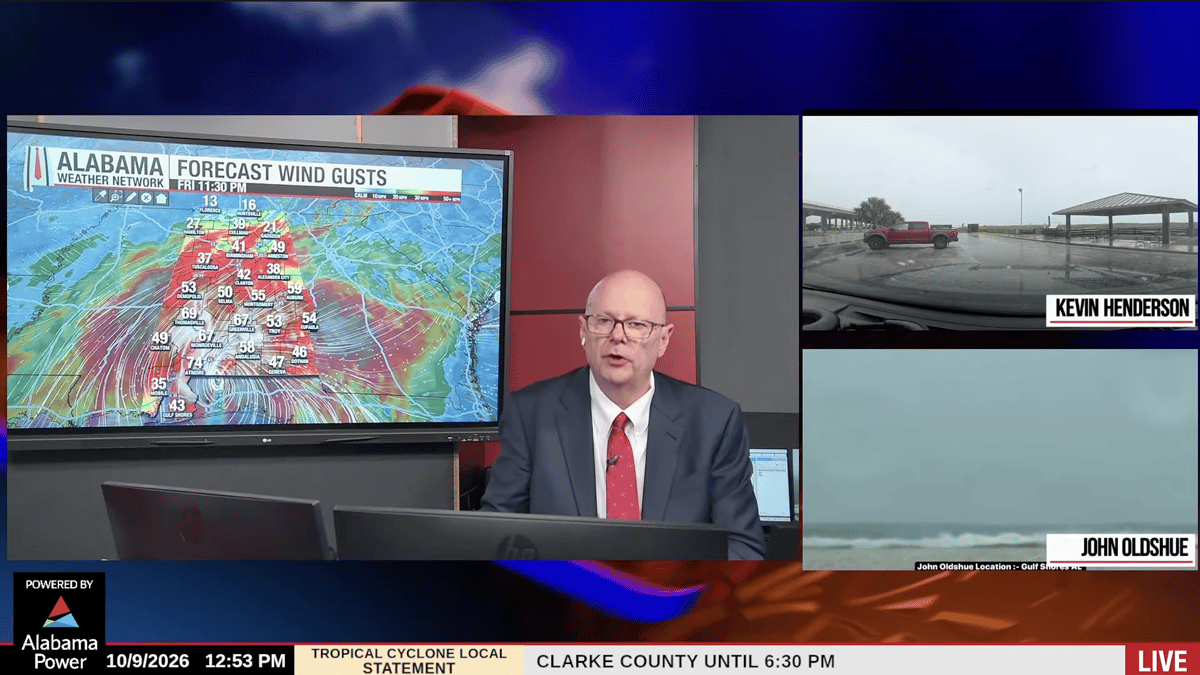
With a trusted solution behind them, AWN could stay focused on the storm and the people in its path. For Bill, the biggest takeaway from Isaias is what comes next.
“Our biggest lesson here was that the coverage doesn’t stop when the storm is downgraded,” he said. “Next time, we will be there in all of these communities for days afterward, talking to the people that have been impacted and getting their stories. I think that’s our next big opportunity.”
Ready to Build Your Own Brand?
Thinking about starting your own weather channel, or taking the one you have to the next level? The Baron Weather Digital Meteorologist Solution, from Baron Lynx and white-label apps to Stream24Cast, gives digital meteorologists the tools to cover the weather their way. Talk to our team today.