Of all the questions Baron's radar team receives, one comes up more than any other: which band do we need? It sounds like a technical question. Really, it's an operational one. The answer almost always comes down to geography, climate, the weather threats you face most often, and what the radar needs to do on its worst day. Here are three situations that illustrate how that decision plays out in practice.
Scenario 1: Detecting flooding and severe weather in a high-rainfall environment
This is one of the most common situations Baron's team encounters, and one where a wrong band decision carries real consequences. The conditions are clear: heavy convective rainfall, frequent flooding, and communities that depend on accurate, timely warnings to make evacuation decisions. There is no margin for error when a radar underperforms in the worst storms.
The answer here is almost always S-band.
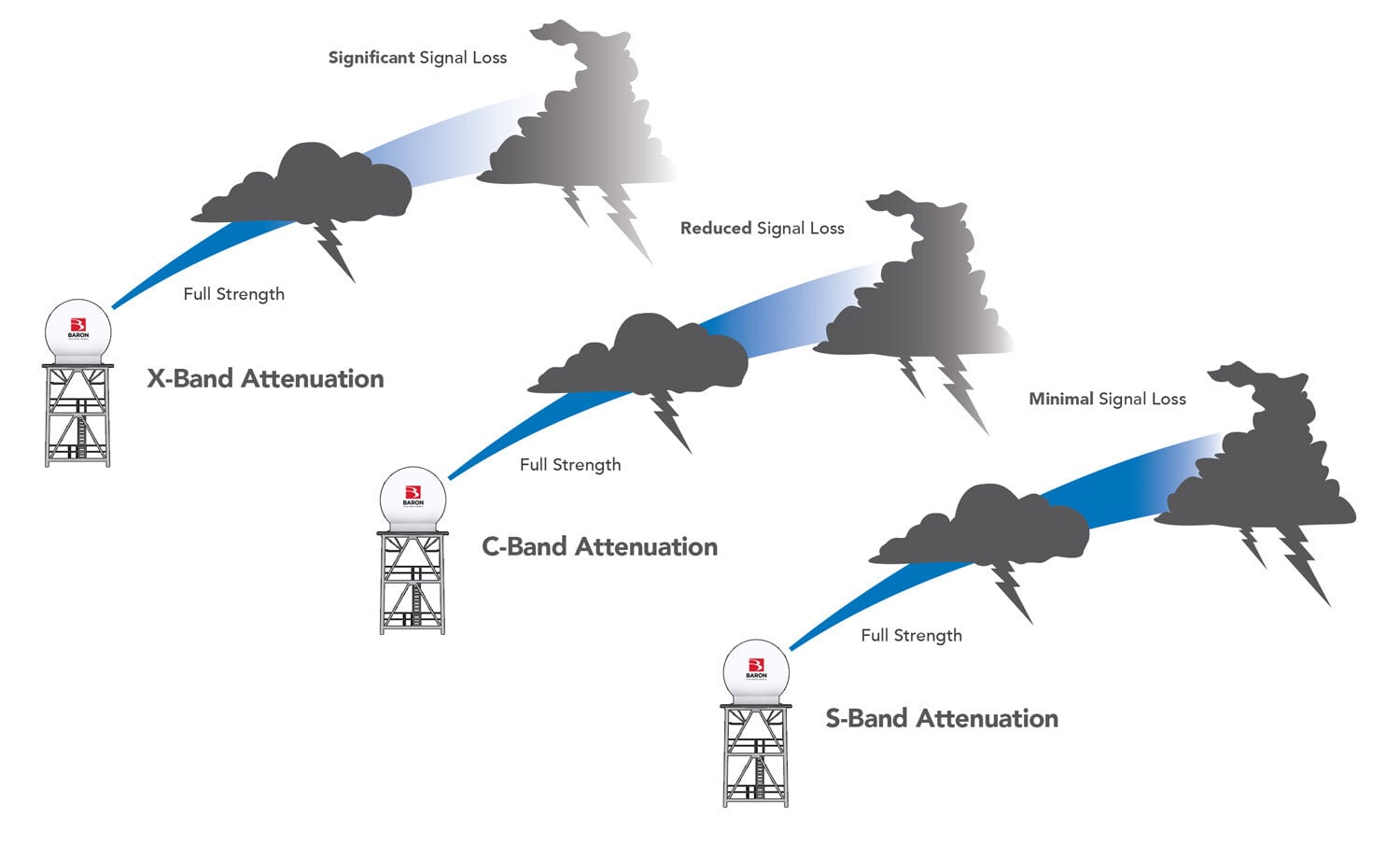
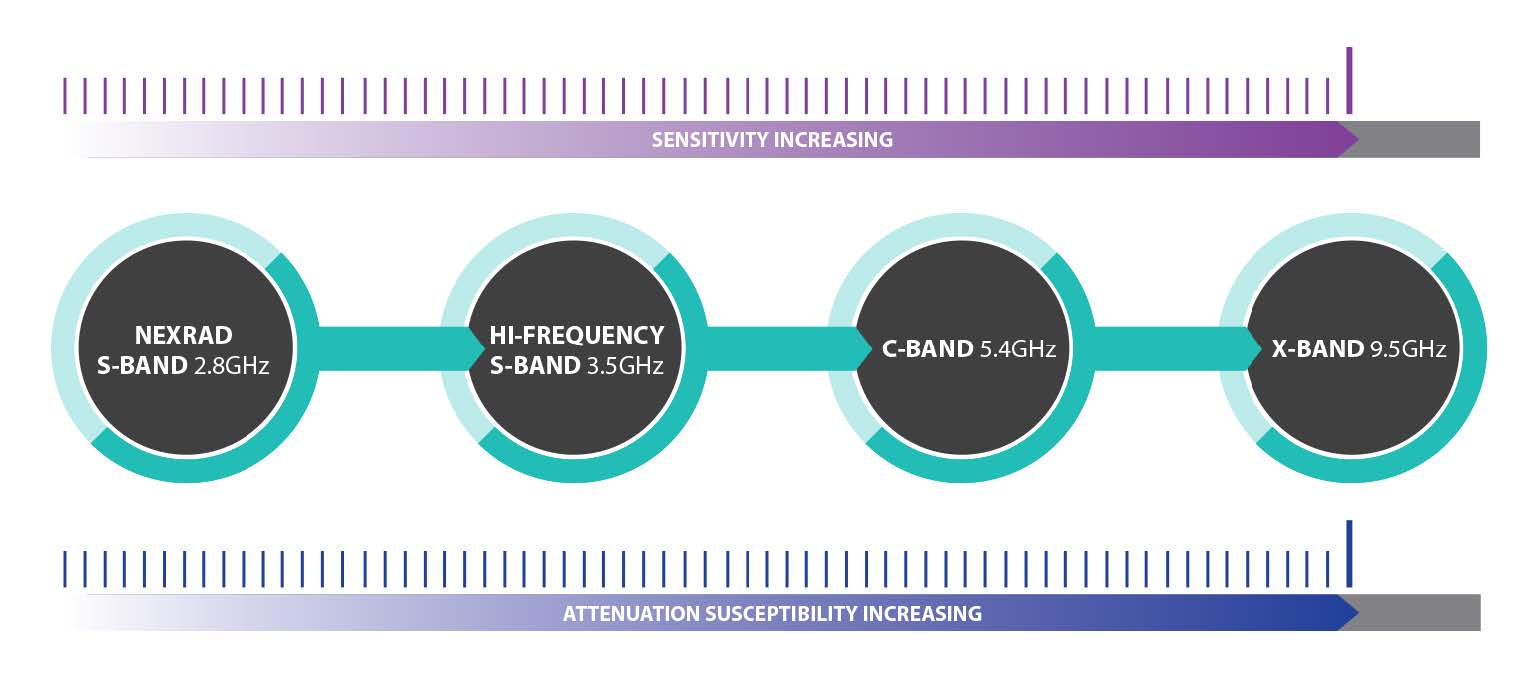
In heavy tropical precipitation, C-band and X-band signals attenuate. They lose clarity as the signal passes through the very rain they're trying to measure. S-band's longer wavelength is far less susceptible to that signal loss, holding a clear picture even when rainfall is at its most intense. That resistance to rain fade isn't merely a technical detail — in a flood-prone environment, it is the point.
S-band also delivers the range these situations demand. With observation distances up to 460 km and Quantitative Precipitation Estimation (QPE) out to 230 km, a well-sited S-band system can cover vast stretches of flood-prone terrain from a single installation. That matters when infrastructure budgets are limited and coverage responsibilities are wide. For organizations where cost is a concern, it's worth knowing that what drives up most S-band deployments isn't the radar itself — it's the antenna. Baron offers an S-band configuration with a smaller 6.1-meter diameter antenna that significantly lowers tower and infrastructure costs, with only a slight reduction in sensitivity — a practical path to S-band performance without the full infrastructure commitment.
Beyond range and rain fade resistance, S-band carries a natural advantage in velocity detection — the radar's ability to accurately track storm movement and wind. Due to the physics of lower frequency signals, S-band produces superior wind data at range, a meaningful edge in environments where storm tracking and early warning are critical.
Scenario 2: Modernizing an aging national or regional radar network
At some point, aging radar infrastructure stops being a maintenance challenge and becomes an operational one. Data gaps, limited range, and systems that can no longer support the products and warnings that stakeholders depend on. The question shifts from "how do we keep this running" to "what do we replace it with." When the goal is broad coverage across varied terrain and weather types — serving everything from aviation and agriculture to emergency management and public safety — the band decision carries real weight.
For most organizations in this situation, the answer is C-band.
C-band radar has become the global standard for national meteorological networks because it has earned that reputation. Excellent range, strong sensitivity across the full spectrum of weather types, and the flexibility to deploy in fixed and transportable configurations. It handles everything from light precipitation and winter weather to severe convective events, at a cost point that makes network-wide deployment realistic.
C-band's greater susceptibility to attenuation in heavy rain is a known limitation—and one Baron addresses directly through advanced signal processing and attenuation-correction technologies. For most networks, a well-configured C-band system is more than capable of meeting operational requirements across every scenario it will face.
Baron offers straightforward upgrade paths across its radar portfolio — from single-polarization to dual-polarization, and from magnetron to solid-state transmitters — allowing organizations to modernize incrementally as budgets and operational needs evolve. That flexibility applies across both C-band and S-band systems. In fact, Baron has upgraded more S-band radars than any other manufacturer, including the U.S. NEXRAD network.
Scenario 3: Filling a radar coverage gap
Not every radar challenge is about building or replacing a national network. Sometimes the need is more localized — a city, a county, a research institution, or an industrial operation that needs high-quality weather data for a specific area that the broader network simply doesn't serve well enough. The solution in these cases is often a standalone C-band radar, sized and sited for the coverage area that matters.
Baron has deployed C-band radars in exactly these situations — including La Plata County, Colorado, where a targeted installation filled a critical coverage gap in a mountainous region the national network couldn't adequately serve. In each case, the goal was the same: precise, reliable weather data for a defined area, integrated into existing display and processing systems without the cost or complexity of a full network build-out.


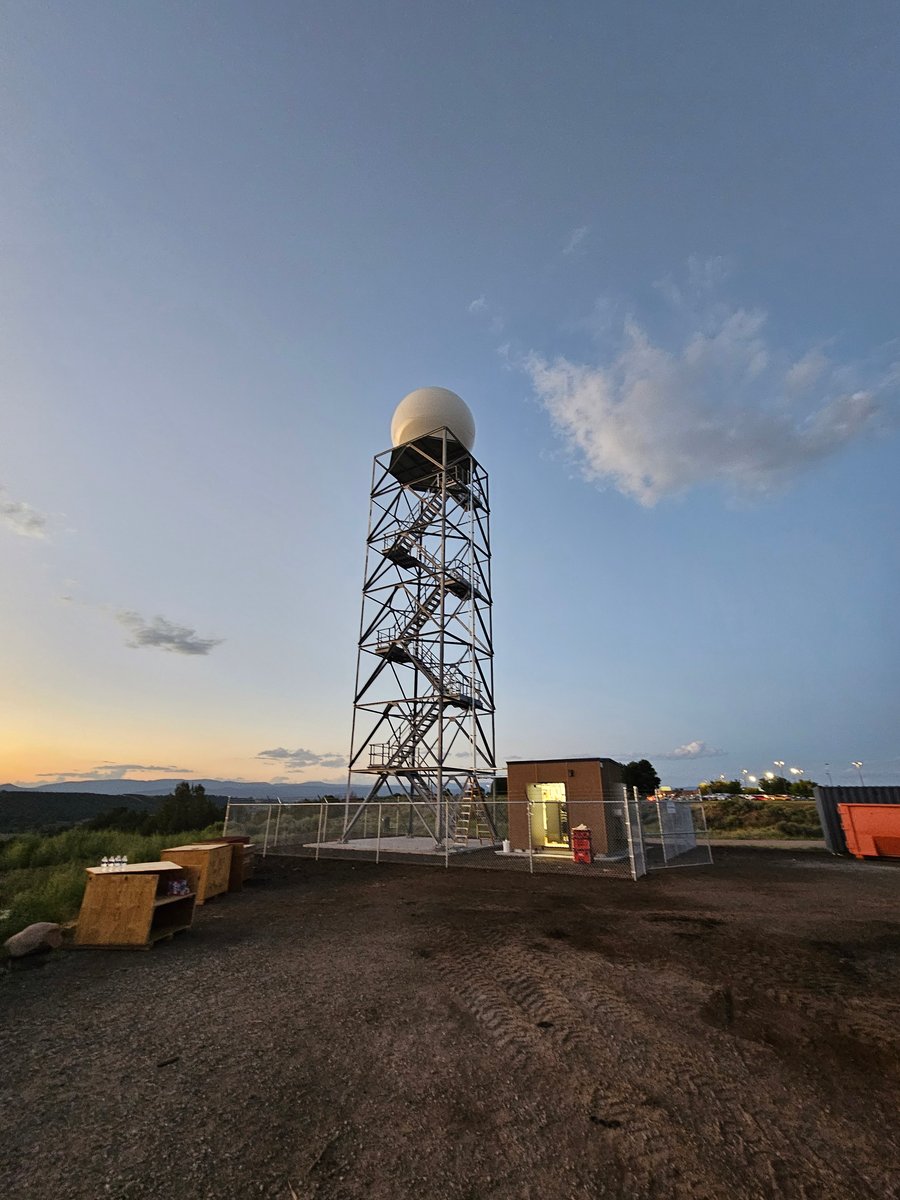
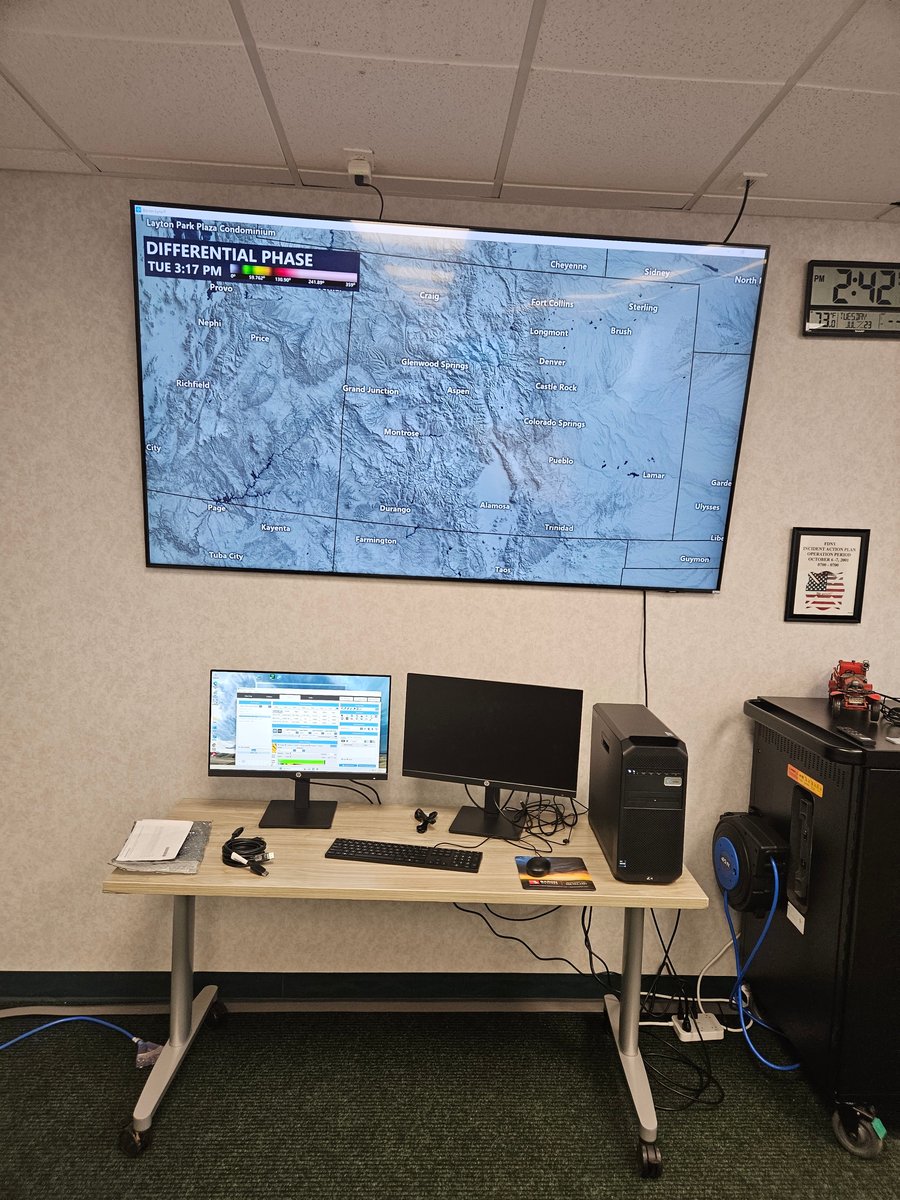
For organizations where the coverage area is small and portability is the priority — mobile research applications, for example — X-band radar is worth exploring. Its compact footprint and short-range precision make it well-suited for specialized and research-oriented deployments where the coverage area is limited by design.
The Common Thread
Three situations, three different environments, three different answers — and the same underlying logic connecting all of them. Match the radar's strengths to the primary threat and operational requirements. S-band for heavy rain, flooding, and superior velocity detection at range. C-band for broad network coverage and targeted gap-fill deployments. X-band for specialized research and mobile applications.
What changes the answer isn't the technology — it's the situation. And that's exactly why Baron's radar team starts every conversation with questions about where you operate and what you're trying to protect, before we ever talk about specs.
For a deeper look at all the considerations that go into radar selection, read The Complete Guide to Selecting a Weather Radar: Bands, Transmitters, Power, and Site Selection.
Ready to work through your scenario?
Every situation is different, and the right band for your environment may not be the obvious one until you map it against your actual coverage requirements and operational goals. Baron has deployed more than 350 radars worldwide across every major climate and terrain type. We'll help you work through the decision and back it up with a detailed site survey before any commitment is made. Talk to an expert today.